Sunday, May 14, 2017

A to Z Reflections 2017

I've been officially retired for seven years and no longer tell people I am a teacher. I don't know that I could manage a classroom anymore. In my thirty plus years teaching, I primarily taught science. For three years, I taught math which was a good break. However, all of my examples were usually using science.

Surprisingly, the A to Z was easy to do. Yes I checked my facts. Memory is not always accurate. I did not keep my promise of consistently posting to this blog during the year after A to Z 2016. A lot of posts are used as lessons for teachers in their classroom and the blog stays busy with visits to them. The most popular blog post I have is the page There is more to dissolving salt than meets the eye.

So, God willing, I will write blog posts each April for the A to Z.

I have a written outline of several short lab books based on materials I created as a teacher. My goal this year is to pull them out and get them ready to be published as print and/or ebooks to be sold. If you are interested please sign up for updates by email and I will let you know when each one is ready. There is no commitment on your part for signing up. And no guarantee on my part to prepare these booklets.  If few indicate an interest, I can't see spending too much time on them.


Sunday, April 30, 2017

Zones

There are a lot of types of Zones on Earth. Climate Zones come to mind. What I find of interest are Global Winds and Global Zones of high or low pressure.

The horse latitudes got their names because this is where horse's died and their bodies were thrown overboard. It is a region of very dry air.

The equator was named the Doldrums because sailors felt tired and listless in the low pressure. Low air pressure usually generate a tired feeling. This is probably why it is so nice to sleep on a rainy day.


Saturday, April 29, 2017

What's in a year?

A year is the time it takes for the Earth to make one revolution around the sun which is 365.2252 days. We compensate for the fraction by having an extra day on February 29th every four years. These are called leap years. Leap years do not occur at the turn of a century unless that century is divisible by 400 like 2000 was. Hence 2000 was a leap year.

What happens in a year depends on how far North or South of the Equator you are. If you live close to the equator, you have a year round summer. As you move North or South, you have seasons. Seasons in the Northern Hemisphere are the opposite of the Southern Hemisphere.

When the Northern Hemisphere has winter, the Southern Hemisphere has summer. Seasons are due to the tilt of the Earth. Some people mistakenly think that the distance from the sun causes seasons. It does not. It is the length of the day. Essentially, the longer the day, the more heat is gained. A longer day produces a shorter night when heat is lost. With more heat gained than lost, you have the heat of summer. The length of the day depends on the tilt of the Earth. Longer days occur when the respective hemisphere of the Earth is tilted toward the sun.

Now why don't you have really hot summers as you move toward the poles. Sunlight hits at an angle and is not as intense as a result. Sort of like pointing a flashlight directly on an object and pointing a flashlight at an angle. The direct beam is stronger. So even though you have excessively long days, the light is not as powerful.

The Earth does move closer to the Sun during the Northern Hemisphere's winter and Southern Hemisphere's summer. This is why the extreme of season's is not as harsh in the Northern Hemisphere as it is in the Southern Hemisphere. The Earth's orbit is elliptical.

Thursday, April 27, 2017

X-rays

X-rays are found on the electromagnetic spectrum. Whether it be lowly radio waves, red light, blue light, gamma rays, x-rays or cosmic rays, they travel at 186,000 miles per second or 300,000 kilometers per second. This is why you see visible light (lightning) before you hear the sound wave (thunder) which travels 700 miles per hour at typical air pressure and temperature.
Spect
Since the speed is the same for all electromagnetic radiation, what differentiates them and why do some have so much power? It is the frequency which is measured by how many wavelengths per second occur. A wavelength per second is called a hertz.

The greater the energy, the more wavelengths per second a wave has.

Excessive exposure to x-rays is not healthy for living organisms.

X rays have more energy than visible light. This is why x-rays can pass through more substances than visible light. X rays are used to look at the unseen in the human body, for unseen cracks within machine parts, the contents of purses and bags in security areas.

Wednesday, April 26, 2017

Weather and Climate

Weather is what is happening right now. It is the day to day temperature, rainfall, humidity and air pressure we experience. Just because we have a hot day in January or a cold day in July, we are not experiencing a climate shift. Because climate is what occurs over a long period of time like 100 years.

Like many discoveries, climate change was discovered by accident. A scientist was monitoring carbon dioxide levels off a westernmost Hawaiian Island that was not as affected by pollution and other carbon dioxide  disruptions caused by man. What was noted was every year, the carbon dioxide level increased.

There are several mechanism that affect climate. One of which is carbon dioxide. Carbon dioxide has the power to trap heat from the sun. So a slight increase of Carbon dioxide will cause the atmosphere to heat up. It is true that the tilt of the Earth is wobbling us to a mini ice age. However, it is not going to happen fast enough to counteract Climate change.

A rise of 2 degrees does not affect the daily weather. It does affect the plants and animals that live in an area. With development, it is not as easy for animals to migrate to a more suitable climate. The habitat might not exist. The greatest factor in extinction is loss of habitat. Animals and plants did become extinct in the last ice age.

At one time dolphins were drowned in tuna nets. It is a problem that was known but not legislated in countries or globally. Tuna companies voluntarily instituted the use of dolphin safe tuna nets. People weren't buying or eating tuna. It is going to take the resolve of the average person to affect climate control which is not going to be everyone. But it doesn't take everyone.


Tuesday, April 25, 2017

Volcanoes

Sthelensharrytruman
Volcanoes are of legend and fascination in their unpredictable and explosive power. I remember the headlines of the eruption of Mt. St. Helen in 1980.. There was video of a car hurtling as fast down the road trying to outrace the volcanic cloud raining down. There was the elderly man, Harry Truman, who refused to leave his home and never found again. We all read the newspapers fascinated.

Archaeologist have unearthed history from the explosion of Vesuvius in 79 AD.

There are two sorts of lava flows. The Hawaiian Islands have shield volcanoes. Scientist and people can stand beside calm lava flows. Native Hawaiians taught people to walk across the active volcano at night. The heat of the red embers were visible at that time.

Shield volcanoes have basaltic lava which has no quartz and no water. It's calm flows continue to flow as the outside hardens which produces a tunnel. These tunnels can fill with ocean water that pipes up sprays of ocean water from the force of incoming waves or have lush entrances of plants on land.
Entrance Thurston Lava Tube


Explosive volcanoes have lighter granitic lava which contains water. The water becomes an explosive gas which expels lava out of the volcanic opening.


Mt St Helens Eruption March 8, 2005
Mt. St. Helen's eruption in 2005     

Monday, April 24, 2017

Uniformitarianism

Some scientific principals seem so obvious. But you can't know something unless you have been told. It is as simple as that.

The law of uniform processes or uniformitarianism simply states that the processes that occured in the past are the same ones that occur today.

This law is usually taught with the law of superposition. The law of superposition states that the rock and soil on top came later than the rock and soil below.


Bama soil
layers of soil in Alabama


Sunday, April 23, 2017

Taxonomy and Tables

Taxonomy and tables make information easier to understand and locate much like the Dewey Decimal system in a library or the alphabetic order of words in a dictionary. Information is more accessible and less volume is required in the description of organisms or information.

Taxonomy is the system of classifying and naming organisms which was developed by Swedish botanist Carl Linnaeus (1707-1778). There were previous systems that were in use. However, the Linnaen system was much easier to use and replaced them all.

Originally there were only two Kingdoms which were the Plant and Animal Kingdoms. In the latter half of the twentieth century, scientists recognized the need to recognize facts that prevented all organisms from being categorized as a plant or animal.

One group was bacteria. Bacteria has a prokaryote cell. This primitive cell is why antibiotics prevent bacterial infections.  The antibiotic attacks a characteristic of the the prokaryote that the eukaryote does not possess. The chief difference between a prokaryote and an eukaryote is that they do not have membrane bound organelles such as a nucleus or mitochondria. The cell membrane of the prokaryote is different than the cell membrane of the eukaryote and that is the structure that antibiotics usually target.

Single celled organisms were the next group that did not fit neatly into the animal or plant kingdoms. Those that straddled both the plant and animal kingdoms were listed in both until these new Kingdoms of Protozoan and Chromista were created. It is important to note, there are other organisations of Kingdoms in use. However, the ones I list are the most commonly taught in classrooms in the United States. Chromista may be listed with Plants as well as with the Protozoans versus their own Kingdom in some textbooks.

The six Kingdoms are

1. Bacteria or Monera

2. Protozoans

3. Chromista - Algae species

4. Fungi

5. Plants

6. Animals

Each of the six Kingdoms are further divided into

Phylum

Class

Order

Family

Genus

Species

The scientific name for organisms is a combination of it's genus and species.

Man - Homo sapiens.

Dog - Canis familiaris

House cat - Felis catus

Red Maple - Acer rubrum

Live Oak - Quercus virginiana

Red Oak - Quercus rubra

Dandelion - Taraxacum officinale


Saturday, April 22, 2017

Being a citizen scientist.

Science is a rational approach to the world in which we examine items and phenomena by questioning what we see. We form hypothesis and test hypothesis. We seek the truth and not an immediate visceral response. Patterns are observed.

Yet that visceral response or gut feeling is due to millions of years of evolution that warns us of danger. Those subconscious cues that exist beyond our rational thought. Science is now acknowledging that we may have other brains in our body such as a smaller one controlling our gut. Hence that gut reaction is very real.

Ironically, it is that need for a pattern that we all seek that combines with the gut feeling that makes us a skeptic at times. Add to that all the contradictions in science. At one time, women were advised to not drink coffee. Now we know a little coffee everyday is good for you.

But as an education teacher I had said a way too many times, "Don't throw the baby out with bathwater.". Science has improved our lives immensely. Let's not let skepticism rule the day. So in your journey as a citizen scientist, keep the following in mind.

1. Slow down for the facts. 
I adopted two puppies. The black one was clearly bigger than the brown one. Looking over their vaccination records, the brown one weighed more than the black one. They had to have them mixed up. The next time, I monitored their weights. That bigger black dog did weigh less than the brown dog. Sometimes facts surprise us.

2. Step away from group think.
This is incredibly hard. When you take biochemistry or cell biology you study models of how systems in organisms are supposed to work. Then you learn, "The model describes the activity but the model really never functions exactly as it is supposed to.
Just like politics, sometimes everyone wants to all agree to get along. As a teacher, I learned I had to make kids like me to get the best out of them. This is a quandary. We all tolerate a lot of talk to get along with people. It's called picking your battle. But we pay a consequence when a conspiracy theory takes hold. Maybe it is time to call out nonsense. Think about all the fake news during the past election.

3. Pick your battles
I work on destroying invasive plants on my property. I call my property a 20 acre nature reserve. I mow tall grasses in sections each year. I never mow the entire area in a year. Because it is a home to birds, opossums, raccoons, deer, snakes, foxes and whatever else shows up. I've had a stray wild turkey visiting a lot. It's  a small place. But I do my part. I also recycle what I can. I dump plant material from the kitchen into the front field.

4. Be a builder.
I pick up litter along the road. I've thought about putting some huge barrels beside the river for trash and haul it out every once in awhile. It bothers me that people love to use the river for fishing and recreation. But they just throw their garbage out where ever. Sure paper rots. But the plastic, metal cans, tires, whatever.
I remember as a Girl Scout, a park ranger explained to our small group that the world is made up of two types of people builders and destroyers. We can't always be a builder. But when we can we should. Don't let someone else's lack of concern weaken your character.

5. Respect other beliefs.
We all have our beliefs. I am a religious person. But forcing your beliefs on someone else should not be considered science. Nor should you tolerate someone's beliefs controlling progress to make peace.

6. Keep an open mind.
A man fell off the side of the mountain and was hanging on for dear life. Another man reached his hand down for him to grasp. The man yelled, "My God will save me!"
The man fell further down the mountain. They dropped a rope to him to climb up. The man yelled, my God will save me. Then he fell a little further and was standing on a ledge. They flew a helicopter next to him and dropped a rope ladder. He shouts louder, "My God will save me."
He proceeds to try to climb down the mountain and gets caught up in a rock slide that he does not survive.
Getting to heaven, he files a complaint with the angel in charge. "Why didn't God save me?"
The angel gives him a sideways look and says, "We sent you a hand, a rope and a helicopter and you didn't take any of them."
Things don't always look like what you expect do they. ☺

Happy Earth Day. There is no planet B.

The Earth is a terrible thing to waste.

Wednesday, April 19, 2017

Quantitative and Qualitative measurement

Scientific discovery begins with observation. Looking at what happens and keeping accurate records is key to analyzing discovery. With television shows purporting to report ghosts, vampires and other elusive items, one item is missing. The discovery is not easily witnessed nor recorded where more than one person consistently observes the same phenomenon.

Although you may need to be trained to use observational equipment in science. You should be able to get the same observation using that equipment as someone else for an observation to be valid.

When measuring what has been observed, you have two methods. The one you use is the one that is practical and will produce meaning.
Smoke cloud from fire
in Denali National Park

Quantitative is when you measure an item precisely like how many lightyears a star is from the Earth or how many grams of a medication compared to the mass of an individual, plant or animal produces optimal results.

What you can't do is quantitatively measure how much water is on the Earth. What you can do is measure the percentage of salts in ocean water. I remember in college, learning that the percentage of salt in the ocean was the same as it was in a living cell. This was proposed as result of the ocean being the primordial soup in which all organisms originated.

Then a teacher pointed out no, the ocean was not consistently the same salinity all over the world. Some oceans had so much fresh water added that they had very low salinity like the North Sea which has about 1 percent salt.  Some seas/oceans have so much evaporation and so little input of fresh water, they were very saline (or salty).  The Pacific and Atlantic have roughly 3.5 percent. The Dead Sea has roughly 33 percent.

But that tidbit of fact I learned was true in that if you measure the composition of salt in ocean water all over the world, the types of salts are all the same whether it is in a river or ocean and reflect the elements available in the Earth's crust.

And that is an example of a qualitative description. A qualitative description describes an object or condition. Diabetes II is often called Diabetes mellitis for the sugar found in the urine. Yes, at one time, someone tasted the urine to detect the excess sugar. Having a high concentration of sugar in the blood is a quality. Having a blood sugar level between 70 and 120 mg per dl of blood is normal.  Using mg per dl is an example of quantitative.

Qualitative descriptions
Quantitative can be used to describe a quality. Other qualities may be state of matter at room temperature, color, smell or taste. Water is a liquid at room temperature, clear and has no smell. The taste of water is due to the minerals dissolved in the water.


Reasoning

The method of reasoning is the hallmark of scientific inquiry. Opinion can be useful in the practical application of science. But it can also be disastrous.

One historical example was "germ theory" in the treatment of puerpural or childbed fever.

Ignaz Semmelweiz observed the rate of infection in two separate maternity clinics operated by the Vienna Hospital. One had a deathrate of about 12 percent and the other was relatively low at 2 percent. What could cause the difference?
Ignaz Semmelweis 1860
Semmelweis observed the clinic with the higher death rate was run by medical students and the other by midwives. He also observed an individual who contracted puerpural from a corpse. He noted that the medical students worked with cadavers and the midwives did not. There had to be particles from the corpses that was transmitting disease.

He recommended that doctors wash their hands in water treated with lime and chlorine to disinfect them. At the time, people felt like he was being ridiculous. He lost his appointment at the hospital as a result. This downturn in fortune caused him to sink into depression and he died at 47.

Later Louis Pasteur and Joseph Lister's work confirmed his "germ theory" and the need for handwashing.

The opinion that no one washed their hands and he was wrong was disastrous.

Ignaz reasoning ultimately led to healthier hospitals and lower rates of childbed fever.

There are two sorts of reasoning, deductive and inductive. Semmelweis used inductive reasoning. He used general observations to reach a specific conclusion.

Having medical students to wash their hands before working with patients and observing whether the rate of puerpural dropped would be an example of deductive reasoning. This sort of reasoning is more specific and is used for testing a hypothesis.

Reasoning has the feel of an opinion. But it is not in that a pattern is observed to create a conclusion. Opinion is based on other factors like emotions, or pre-existing thought patterns. 

A modern day example is global warming. Global warming is real. It is such a big and difficult problem, it is easier to deny the problem than deal with it. I'm 60. I'll be dead when the problem comes to fruition. So the question is, do we deny a problem because it is easier. Or do we recognize the problem and deal with it before it impacts our great-grandchildren.

No one would consider using a doctor who refused to wash their hands. Go to a physical therapist, watch the latex gloves go on before touching you. Too many have seen themselves or a friend acquire an infection from a clean healthy patient.

Monday, April 17, 2017

Ornithology

Ornithology is the study of birds. There are five major groups of vertebrates; fish, amphibians, reptiles, birds and mammals. With further examination, scientist have begun to see where birds could still be grouped with the reptiles. Personally, I think birds have diverged and evolved enough to be their own group of vertebrates. Birds are warm blooded and have four chambered hearts. Reptiles are cold blooded and have three chambered hearts.

Birds have feathers and generally can fly. There are flightless birds like the Ostrich or Emu. Chickens only fly enough to cause a bit of trouble for the Chicken owner. Birds lay eggs with hard shells to prevent the contents from drying out. Their bones are hollow.

Birds are special in that they are some of few wild animals that people can be familiar with. Their ability to fly has fascinated man with their relationship between Earth and Heaven. A lot of mythology is attached to birds. Interesting enough, finding a dead bird on your porch means you will experience a new beginning.

Two of my favorite birds follow.

Mockingbird

Tim McCormick     Charlottesville, Virginia


Northern Cardinals (5624155474)
Male and Female Cardinals


Sunday, April 16, 2017

Native Species

There is a nice nature trail through an old neighborhood in Warner Robins. The houses were originally quite expensive; so the area has held up although it too is in decline. I live in a beautiful place out in the country. But I fancy a few of the homes along this trail so my bull dog can have her much loved walk. Why I would consider leaving a home built in 1996 for one built in 1966.

More importantly, why would I crave that little nature trail. It is full of invasive species of plants. Plants like Nandina. When the food gets scarce, birds eat its colorful orange berries. Then die from cyanide poisoning. Nandina is sold in nurseries throughout Georgia and is an invasive species that crowds out native species. http://www.decaturish.com/2017/03/invasive-bushes-in-decatur-killing-cedar-waxwings/

What is an invasive species depends on where you live. That trail was paved to make it easier to maintain water and sewer lines which wind through this low area. An intermittant stream also follows beside the trail. I've walked the trail and identified most of the plants, very few are native. But the chipmunks don't seem to mind.

Smooth cord grass which is a major producer in the marshes of the intertidal zone on the Eastern coast of the United States is a major invasive species of China.

The Red eared Slider is a common pet which has become an invasive species in China and the United Kingdom. The Red Eared Slider natural habitat is in the Southeastern United States. I remember my brother releasing his pet turtle with heavy encouragement from my mom. I could tell he did not want to. But my mother could not stand the smell. I hope it was a native species. Even worse are people who will flush fish down a toilet. The animal may live. But it will probably die a terrible death.

In Florida, there were people who released a type of eel in the waterways because they liked to eat them. When you consider there were no predators, the population is out of control. And for people like me, I don't care to eat them. Today the big legislations in Georgia is about Tilapia farming. They want looser regulations. But a release of these fish in Georgia waterways would be a disaster for native species. Tilapia are farmed for food because they reproduce and grow rapidly.

Hogweed which produces terrible skin burns was introduced to the United States as an ornamental. It is not in Georgia yet; but it is coming.

Wild hogs are a problem in the Southeastern United States and Australia. When Hernando DeSoto made his murderous tromp across the Southeast between 1539 and his death in 1542, he released domesticated pigs which became feral. On occasion, I see black pigs on my property or crossing the road to get to the river.

One big solution for the average person is to use native species for your lawn. I work on removing the Chinese Privet from my property. Walking across the overgrown field which is my front yard, there are so many invasive species. And yes, I pull them up. It is a hopeless task. But this is my part along with sharing what I know to those who will listen.


Wild Azaleas - Central Georgia

Friday, April 14, 2017

Mass and Weight

Mass is the amount of matter an object contains. Mass is measured in grams or kilograms. Your mass will be the same on Earth, the void of space, the moon, Jupiter, on top of the highest mountain.

But your weight would change in each of these situations. Weight is the measurement of the gravitational pull on an object.

If you weigh 100 pounds on Earth, you would weigh 16.6 pounds on the moon. It is possible that you could jump and be launched into space. The gravity on the moon is approximately a fifth of that of Earth and there is no atmosphere to penetrate. The lunar rover's maximum speed was 5 mph to prevent an accidental launching of the rover as it went up a hill.

The most massive planet is Jupiter, so it would exert the strongest gravitational pull. If you weighed 100 lbs on Earth, you would weigh 236.4 lbs on Jupiter. You would probably not be able to lift your arm.

One problem for astronauts living in an weightless environment is that their muscles atrophy. There is no gravity to create resistance to work against.

Your weight on Saturn would be 91.6 pounds if you weigh 100 pounds on Earth. Imagine you could fill a bowl with water that would be large enough to hold Saturn. Saturn would float. Even though Saturn is very large, it is not very dense. It is a large snowball in space. A snowball made up of 94 percent hydrogen, 6 percent helium and a small amount of ammonia and methane. It is theorized that Saturn has a rocky core about the size of the Earth. The mass of Saturn is slightly less than that of the Earth. But it's diameter is ten times greater not counting it's rings.

The sun contains 99.9 percent of the matter in our solar system. The diameter of the sun is 100 times greater than the Earth. Your weight of 100 pounds on Earth would be 2707 pounds. If you could wear a fire proof, pressure proof suit, You could not life your big toe much less your body.

Calculator of your Weight on another planet.


The is no planet B folks. Let's take care of it. And yes, your weight would be very slightly less 2 miles above sea level on a very high mountain. There is less gravity.

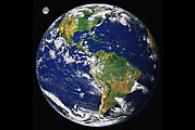
Earth - The Blue Marble
NASA photo


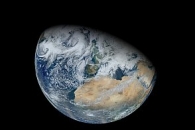
North Africa and Europe from Suomi NPP
NASA photo


Thursday, April 13, 2017

Scientific laws

A scientific law is a statement assumed to be true.

Scientific inquiry always keeps in mind they can be wrong. For the most part this is true. Human nature doesn't like change and/or ideas are so popular no one wants to let go. The same hypocrisy that happens in the dirtiest of politics.

Science is based on seven steps.

The first is to name the problem. You can't solve a problem unless you know what it is.

The second is to study the problem by observation and discovering what others have written or said.

The third is to form an hypothesis which is an educated guess to a specific question. Often you hear people say they have a theory. But their theory is actually an hypothesis. You can't create a theory until you test the question.

The fourth step is to design an experiment that tests your hypothesis.

The fifth step is to do the experiement and take careful notes.

The sixth step is the conclusion. You take all the evidence and decide whether the hypothesis was supported or was wrong.

The seventh step is you publish your results. In order for an experiment to be successful, it must be replicated by other scientists. The hypothesis does not have to be proven. A new hypothesis may be created as a result of the experiment.

A scientific theory is backed by proven facts. A scientific theory is different from a everyday use of the term. Below is Merriam Webster's definition of a theory and then Wikipedia's definition of a scientific theory. I was careful to capture the web address on the clipping so you may examine the page.


Wednesday, April 12, 2017

Kelvin Scale

Americans in everyday life use the customary units inherited from Europe. Scientists in the United States and most countries of the world use the metric system.

The metric system is more practical and easier to use. For example, there are 100 centimeters to a meter and 1000 meters to a kilometer. To divide by ten or a multiple of ten is easier to divide by and convert. There are 12 inches to a foot, 3 feet to a yard, 5280 feet to a mile. Moving from feet to miles is cumbersome.

Metric measurement enables very large and very small objects to be measured.

Kelvin is a unit to measure temperature. 0 degrees Celsius is 273.16 units Kelvin.

0 degrees Celsius is equal to 32 degrees Fahrenheit which is freezing point. Celsius is the metric measurement of temperature. 100 degrees Celsius is the boiling point of water. 212 degrees Fahrenheit is the boiling point of water.

Celsius's use of negative numbers to denote temperatures below freezing made it difficult to measure gases and did not work with the Gas Law equations.

Scientist's needed a variation of Celsius to describe absolute zero. Absolute zero is the temperature at which all matter ceases movement. Scientist have actually reduced the temperature to below Absolute Zero. This article discusses their findings.  http://www.livescience.com/25959-atoms-colder-than-absolute-zero.html

Depending on what is being described, Celsius and Kelvin are used by scientists. For meteorology and everyday usage, Kelvin temperatures are too cumbersome and Celsius is desired.

0 Kelvin = 273.16 degrees Celsius = 459.67 degrees Fahrenheit. Note that Kelvin does not use the term degree like Celsius and Fahrenheit.

Room temperature is 293 Kelvin, 20 degrees Celsius, 68 degrees Fahrenheit.

In the United States, it is more of a point of view change in that thinking in metric would not be a hard shift. The writer of this blog views that we have not made the total change due to three factors. One is cost in redoing roadsides and the myriad ways we use measurement. Two is the fact that many people feel like metrics is difficult and do not want to learn a new system. Three is that Americans don't like to told what to do and/or like some tradition.

Some articles on why the United States has not changed over.
https://www.theatlantic.com/technology/archive/2015/06/whos-afraid-of-the-metric-system/395057/
http://www.businessinsider.com/why-the-us-doesnt-use-metric-2016-6

Banner Peak across Island Pass Lake snow
Banner Peak across from icy island Pass lake in Sierra Nevada United States photo by David Richardson

Tuesday, April 11, 2017

Jupiter

Most stars have a partner star and they revolve around one another. Stars are so far away that the stars we see are two separate stars whose light merge together.

What does that have to do with Jupiter? Jupiter is almost large enough to be a star. Our sun, Sol, does not have a partner star.

Jupiter and Saturn are unique in that they emit more energy than they receive from the sun. Jupiter has almost enough mass for nuclear fusion to occur at it's core. But it doesn't and it is not a star.

The atmosphere of Jupiter is mostly Hydrogen and Helium. Anytime hydrogen and helium is released in the Earth's atmosphere, it is eventually lost to outer space. The Earth does not have the gravitational field to hold on to these light elements. The gravity of Jupiter is so strong, NASA has to be careful how close a probe approaches Jupiter. There is a point where the probe cannot escape the gravitational field.

In the atmosphere of hydrogen and helium, swirls of ammonia and water clouds occur. The giant Red Spot is several times the size of the Earth and a huge hurricane. Two more smaller red spots have been found.

Galileo developed the first telescope and discovered five moons orbiting Jupiter. They are called the Galilean moons. This discovery allowed Galileo to doubt the theory that everything in the universe revolved around the Earth. This lead to his assertion that the planets orbited the sun. Unfortunately, he was tried for heresy and made to recant. Like today, explanations of the natural world had crept into religious dogma and common thought.  Jupiter has 53 documented moons and 14 provisional moons which may lead to 67 moons in total. Jupiter has three faint rings.

Jupiter's day is just under ten Earth hours.

Jupiter's year is 4333 Earth days or 11.8 Earth years.

https://solarsystem.nasa.gov/planets/jupiter/indepth

Jupiter family
Montage of Jupiter and the Galilean satellites, Io, Europa, Ganymede, and Callisto, all photographed by Voyager 1.
Photo courtesy of NASA
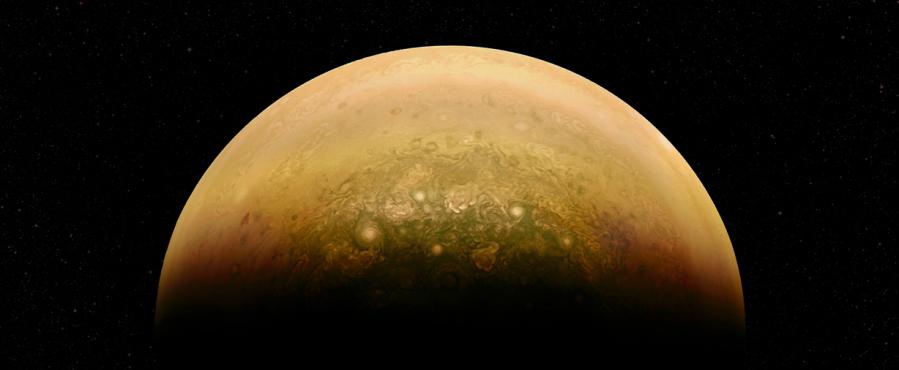
 Target Name: Jupiter
 Is a satellite of: Sol (our sun)
 Mission: Juno
 Spacecraft: Juno
 Instrument: JunoCam
 Product Size: 1228 x 506 pixels (w x h)
 Produced By: Alex Mai 

Inertia

An object in motion will stay in motion.

An object at rest will stay at rest.

This is Newton's first law of motion or the "law of inertia"

We did not use fuel to propel the Apollo space craft to the moon or from the moon to the Earth. Fuel was used to escape the gravitational field of the Earth and later the Moon. Fuel was used to push the Apollo spacecraft in the direction it needed to go.

But once the Apollo space craft was moving toward the moon or toward the Earth, no fuel was used for propulsion. The Apollo space craft continued to move through empty space. There was no friction of an atmosphere to stop the Apollo space craft. Inertia was the means of Space travel to the moon. The gravitational forces of the Moon and Earth also came into play as the Apollo capsule approached them.

AS8-13-2329
Earth Rise from the Moon    Courtesy of NASA   taken by astronaut Frank Borman

Sunday, April 9, 2017

Hydrology

Hydrology is the study of water on Earth.

The water cycle describes the movement of water from bodies of water to the air back to land and back again. I've even written a water cycle story. Maybe I should dust it off and finish.

As a rule of thumb, the closer the land is to a large body of water, the more humid the climate is.

Sometimes the moisture laden air must go up in elevation. As the air moves up, it cools and has less energy to hold water and there is heavy rainfall. Then when the air descends in altitude, it warms up and holds what little water it had. Latitudes North and South of 30 degrees have Global Winds called the Prevailing Westerlies. On the West coast of the United States and Canada, there is a rain forest due to these two factors.

Why isn't there a rain forest along Mexico, Peru and Southern California. These areas are under the influence of the global winds called Tradewinds. Tradewinds are located between 30 degrees South and 30 degrees North and blow from the East to the West. They are called Easterlies.  Since they blow from the East to the West, they blow moisture away from the West coasts back to the Pacific Ocean. This causes the land to be dry. Rainfall from moisture is moisture that makes it from the Gulf of Mexico or Atlantic Ocean after traveling over a land mass.

My favorite item to teach was about groundwater. There used to be a lot of artesian wells where my dad grew up. An artesian well is a spring that breaks to the surface. The water spews because of the release of pressure. My dad used to take us to an artesian well they collected water when he was a boy. I remember the strong smell of sulfur. We would take a quick sip of the stinky, cold clear water. Then my dad would stand and drink, savoring the water of his youth.

Many of the artesian wells have disappeared because of development. My favorite story of my dad who was born in 1925 was his digging in the yard and an artesian well springs up. His older brothers said, "Oh no, you're going to flood the Earth. You better cover that up." My dad as a small boy put several feet of dirt to cover the spring.

The diagram below shows how groundwater moves through the Earth. The water table moves up and down depending on how much rainfall replenishes the water lost through surface water evaporation and removal by wells.


Friday, April 7, 2017

Gravity

GPB circling earth
Diagram courtesy of NASA
Gravity is the attraction of one body for another. The larger the bodies, the greater the attraction. It is theorized that matter puts a dent in space. That dent causes the second object to roll toward the first body.

Gravity holds the Earth and other planets in orbit around the Sun. These orbits are elliptical. Comets sometimes have irregular orbits. Most comets are found in the Van Oort Belt. The comets with irregular orbits in which they swing close to the sun and soar far from the Van Oort Belt are the ones that have the head and tail that we see such as Halley's Comet. The long tail is due to some of the dirty ice that makes up a comet melts when the comet approaches the sun. Eventually a comet with an irregular orbit will totally melt and disappear. Although the orbit is irregular in respect to the Van Oort Belt, the orbit is still elliptical.

There are four fundamental forces. They are gravitational, electromagnetic, strong and weak forces. All four of them can be described mathematically. Of the four, gravitational manifests a continuous field. A goal of physics is to create a situation where all four fundamental forces unite to form one force.